
29 Aug 2026
How to Organize Files, Stationery & Office Supplies on One Rack
Learn how to organize files, stationery, and office supplies on one rack with practical office storage ideas, file organization tips, stationery storage solutions, and space-saving rack organization ideas.
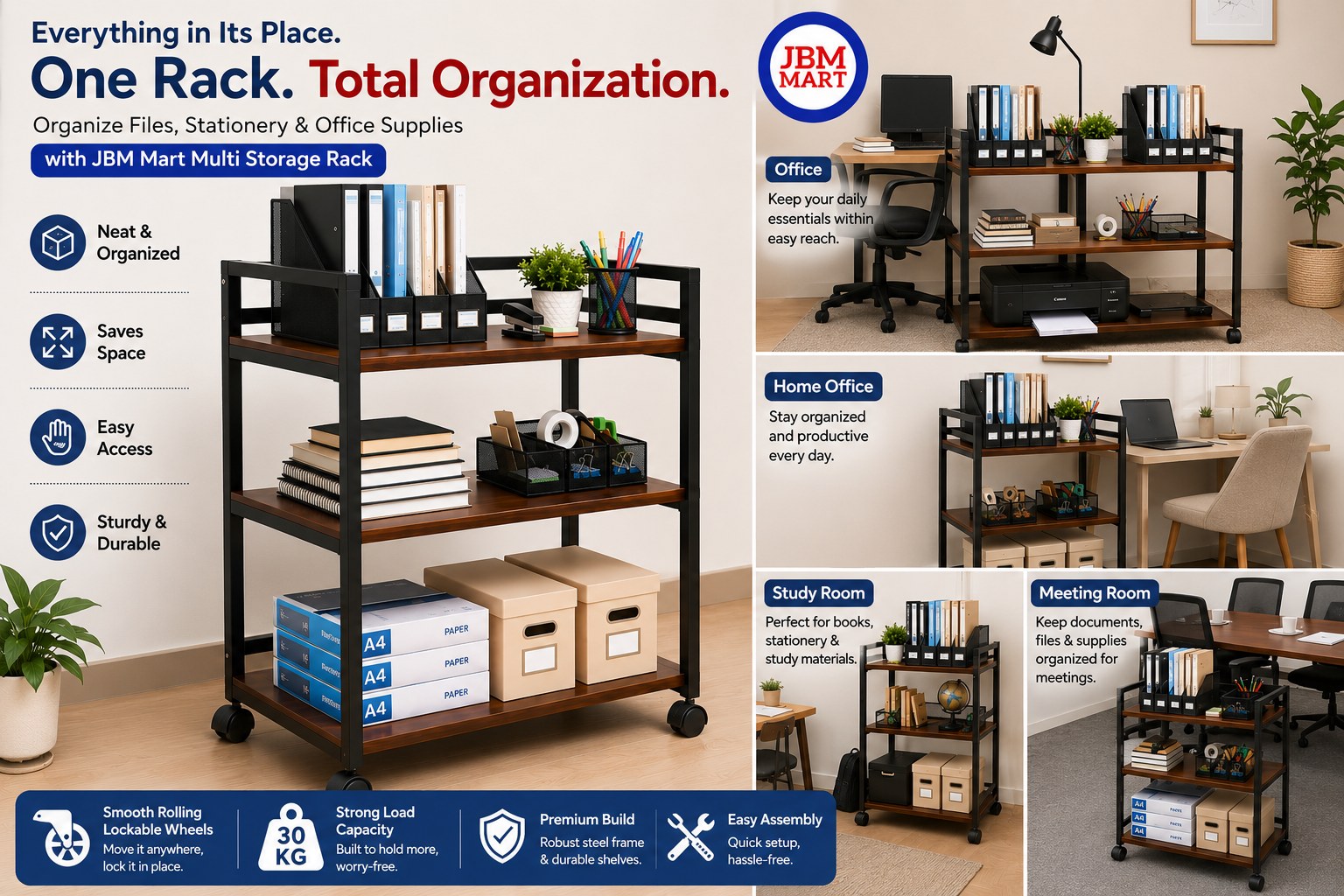
Keeping an office organized can sometimes feel like a difficult task, especially when files, stationery, documents, notebooks, printer paper, and other office supplies keep increasing. A messy workspace can make it harder to find important documents and can also take away valuable working space. However, you do not always need a large filing cabinet or multiple storage units to keep everything organized. With the right approach, a single multi-shelf rack can become a practical storage solution for files, stationery, and everyday office supplies.
Whether you are organizing a home office, a small business, a reception area, a school office, or a regular workplace, an office rack organization system can help you use vertical space efficiently. The key is to give every type of item its own place and arrange the rack according to how frequently you use those items.
Start by Sorting Your Office Supplies
Before arranging anything on the rack, take a few minutes to sort all your office supplies. Instead of putting everything together, group similar items. Files and documents should be kept together, stationery should have its own area, paper supplies can be placed in another section, and extra or backup supplies should have a separate space.
For example, files may include invoices, bills, client documents, employee records, project documents, reports, purchase records, and other important paperwork. Stationery can include pens, pencils, markers, highlighters, staplers, scissors, rulers, sticky notes, paper clips, and staple pins. Paper supplies can include printer paper, envelopes, notebooks, writing pads, labels, and letterheads.
This simple sorting process is the first step toward creating an effective office file storage rack because it prevents different types of supplies from getting mixed together.
Give Every Shelf a Purpose
Once everything is sorted, decide what each shelf will be used for. One of the biggest mistakes people make while organizing an office rack is placing items wherever there is empty space. This may make the rack look full, but it does not make it convenient to use.
Instead, assign a purpose to each shelf. The top shelf can be used for items that are not needed every day, such as archived documents, spare stationery, backup supplies, or old records. The middle shelves are ideal for frequently used items such as current files, notebooks, stationery, folders, and office accessories. The lower shelf can be used for heavier items such as paper reams, large files, storage boxes, or bulk stationery.
This arrangement makes it easier to reach everyday supplies while keeping less frequently used items out of the way.
Keep Important Files Easy to Find
Files are usually one of the biggest sources of office clutter. When documents are stacked randomly, finding a particular file can take several minutes. A better solution is to use vertical file holders or folders and arrange files according to categories.
You can organize files by client, department, project, month, year, or document type. For example, you could have separate sections for accounts, purchases, sales, clients, employees, invoices, and important records.
Adding labels can make this system even more effective. Instead of opening several folders to find one document, you can quickly identify the correct section by reading the label. If your business regularly handles paperwork, this type of file organization idea can save time and keep important documents from getting misplaced.
Use Small Containers for Stationery
Small stationery items can quickly make an office rack look messy. Pens, pencils, markers, paper clips, binder clips, staple pins, rubber bands, sticky notes, and other small supplies should not simply be placed loose on the shelf.
Small boxes, trays, or containers can be used to keep these items separated. You could have one container for pens and pencils, another for markers and highlighters, and another for paper clips and other small accessories.
This makes your stationery organization much easier and also allows you to see when supplies are running low. Instead of searching through a shelf for a pen or stapler, you can immediately find it in its designated place.
Keep Frequently Used Supplies Within Reach
Not every item in your office needs to be equally accessible. Think about which supplies you use every day and which ones you only need occasionally.
Pens, notebooks, current files, calculators, sticky notes, staplers, and markers should ideally be placed at a comfortable height. Items that are used less frequently can be stored on the upper shelves, while heavier supplies can be kept lower down.
This simple approach makes the rack more practical because you are organizing it based on your daily routine rather than simply arranging items according to their size.
Make Use of Vertical Space
When office space is limited, the walls and vertical areas of the room can provide valuable storage opportunities. A multi-shelf rack allows you to make better use of vertical space without taking up a large amount of floor area.
This can be particularly helpful for a home office or small workplace where every inch of space matters. Instead of keeping files and stationery on the desk, you can move them onto the rack and leave your work surface free for your computer, monitor, keyboard, documents, or other equipment.
A product such as the JBM Mart Multi Storage Rack can be useful for this kind of setup because its multiple storage levels allow different categories of office supplies to be arranged in one place. Rather than using separate furniture for files, stationery, and miscellaneous supplies, a multi-shelf rack can help bring these items together while keeping them organized.
Use Labels to Create a Simple Filing System
Labels may seem like a small detail, but they can make a significant difference in office organization. When several people use the same rack, everyone can immediately understand where something belongs.
You could label shelves or containers as Files, Stationery, Paper, Current Documents, Office Accessories, and Extra Stock. Files can then have more specific labels such as Accounts, Clients, Purchases, Sales, 2026 Records, or Invoices.
A labelled rack also makes it easier to maintain organization because people are more likely to return an item to the correct location when that location is clearly marked.
Keep Paper and Heavy Supplies on Lower Shelves
Printer paper and other paper products can become surprisingly heavy when stored in large quantities. For this reason, heavier supplies are generally better placed on the lower shelves of a rack.
You can use the bottom section for printer paper, large files, storage boxes, bulk stationery, and other heavier items. This also makes it easier to maintain a balanced storage arrangement.
Lighter products such as folders, notebooks, pens, and small stationery can be kept on the middle and upper shelves depending on how often they are used.
Create a Separate Area for Current Documents
If your office handles a lot of paperwork, creating a small section for current or pending documents can prevent your entire rack from becoming disorganized.
For example, documents that have recently arrived but still need to be checked, signed, processed, or filed can be placed in one labelled area. Once the work is completed, move them to their permanent location.
This simple system prevents papers from being left randomly on desks or mixed with completed files.
Don't Overload the Rack
A common mistake when trying to organize office supplies is attempting to fit everything onto the rack. Although a storage rack can hold many items, overfilling the shelves can make everything difficult to access.
Leave some space between categories and avoid creating unstable piles. Keeping a little free space also gives you room for new files and supplies in the future.
If you find that one category is constantly overflowing, it may be a sign that you need to reduce unnecessary items or create a separate storage solution for archived materials.
Organizing a Rack for a Home Office
A well-organized rack can be especially useful in a home office because home workspaces are often smaller than traditional offices. Instead of allowing stationery, documents, notebooks, and printer supplies to occupy the desk, you can use a rack to keep them nearby but out of the way.
For example, the middle shelf can contain current documents and notebooks, another shelf can hold stationery, and the lower shelf can store printer paper and backup supplies. The top shelf can be reserved for less frequently used files and extra materials.
This creates a cleaner workspace without requiring a large cabinet.
Organizing a Rack for a Small Business
Small businesses often have to manage invoices, purchase documents, customer records, stationery, packaging materials, and other supplies in limited space. A multi-shelf rack can help divide these items into practical categories.
For example, one section can be dedicated to business documents, another to stationery, and another to paper and office supplies. If employees share the rack, labels can help everyone follow the same system.
This approach can make everyday work more efficient because employees spend less time searching for commonly used supplies.
Keep the Rack Organized Over Time
Organizing your rack once is useful, but maintaining it is what keeps the system working. One simple habit is to follow a "return it after use" rule. Whenever you take a file, notebook, pen, or stationery item from the rack, return it to its designated place after you finish using it.
It is also useful to check the rack once a month. Remove empty packaging, broken stationery, outdated documents, and supplies that are no longer needed. Archived documents can be moved away from the active storage area so that current files remain easy to access.
A few minutes of maintenance every month can prevent the rack from becoming cluttered again.
Common Office Rack Organization Mistakes
One of the most common mistakes is mixing every type of item together. Files, stationery, paper, and miscellaneous supplies should ideally have separate areas.
Another mistake is creating large horizontal piles of documents. These piles make it difficult to access files underneath. Vertical file holders are usually more convenient for frequently accessed documents.
It is also better to avoid placing heavy boxes or large quantities of paper on the highest shelf. Keep heavier items lower and lighter items higher.
Finally, avoid keeping things simply because there is space for them. If an item is broken, empty, outdated, or no longer useful, removing it can make the entire storage system easier to manage.
Frequently Asked Questions
How do I organize office supplies on one rack?
Start by separating supplies into categories such as files, stationery, paper, current documents, and extra stock. Assign each category a shelf or storage area and use containers and labels to keep smaller items organized.
What is the best way to organize office files?
Group files according to a system that makes sense for your work, such as client, project, department, year, or document type. Use labelled folders or vertical file holders so individual files are easy to identify.
How can I organize office supplies in a small space?
Use vertical storage with a multi-shelf rack. Keep frequently used items within easy reach, store heavier supplies on lower shelves, and use small containers for stationery.
What should be kept on the top shelf of an office rack?
The top shelf is best for lightweight items that are not required frequently, such as archived files, backup stationery, or extra office supplies.
How do I keep stationery organized?
Separate stationery into groups and store small items in containers or trays. Pens, markers, clips, staples, sticky notes, and other accessories can each have their own designated space.
Is a multi-shelf rack good for office storage?
Yes. A multi-shelf rack can be used to organize files, stationery, paper, notebooks, and other office supplies while making better use of vertical space.
People Also Ask
How do you organize files and stationery together?
Separate files and stationery into different sections of the rack. Use file holders for documents and small containers for stationery so that each category remains easy to access.
How do you organize an office with limited space?
Use vertical storage such as a multi-shelf rack, remove unnecessary items, and keep frequently used supplies within easy reach.
What is the best storage for office files?
Labelled folders, file holders, and multi-shelf racks can provide practical storage for office files, especially when documents are organised by category, client, project, or year.
How do you organize a messy office quickly?
Sort everything into categories first, remove items you no longer need, assign each category a specific storage location, and label the shelves or containers.
How do you maximize office storage space?
Use vertical storage, organize items by frequency of use, use containers for small supplies, and keep heavy or bulky items on lower shelves.
Organizing files, stationery, and office supplies on one rack does not have to be complicated. The most important thing is to create a simple system that you can easily follow every day.
Start by sorting your supplies, give every category a designated place, and use file holders for documents, containers for small stationery, and labels for quick identification. Keep frequently used items within easy reach, heavier supplies on lower shelves, and less frequently used items toward the top.
Organizing files, stationery, and office supplies on one rack is a simple way to reduce clutter and save space. By grouping similar items, using labels, and keeping frequently used supplies within easy reach, your workspace can stay neat and efficient. The JBM Mart Multi Storage Rack offers a practical way to keep files, stationery, notebooks, and other office essentials organized in one convenient place.