
01 Sep 2026
Modern Clothing Store Display Ideas for 2026
Modern clothing store display ideas for 2026, including garment racks, mannequins, lighting, color blocking, seasonal displays, store zoning, and visual merchandising tips.
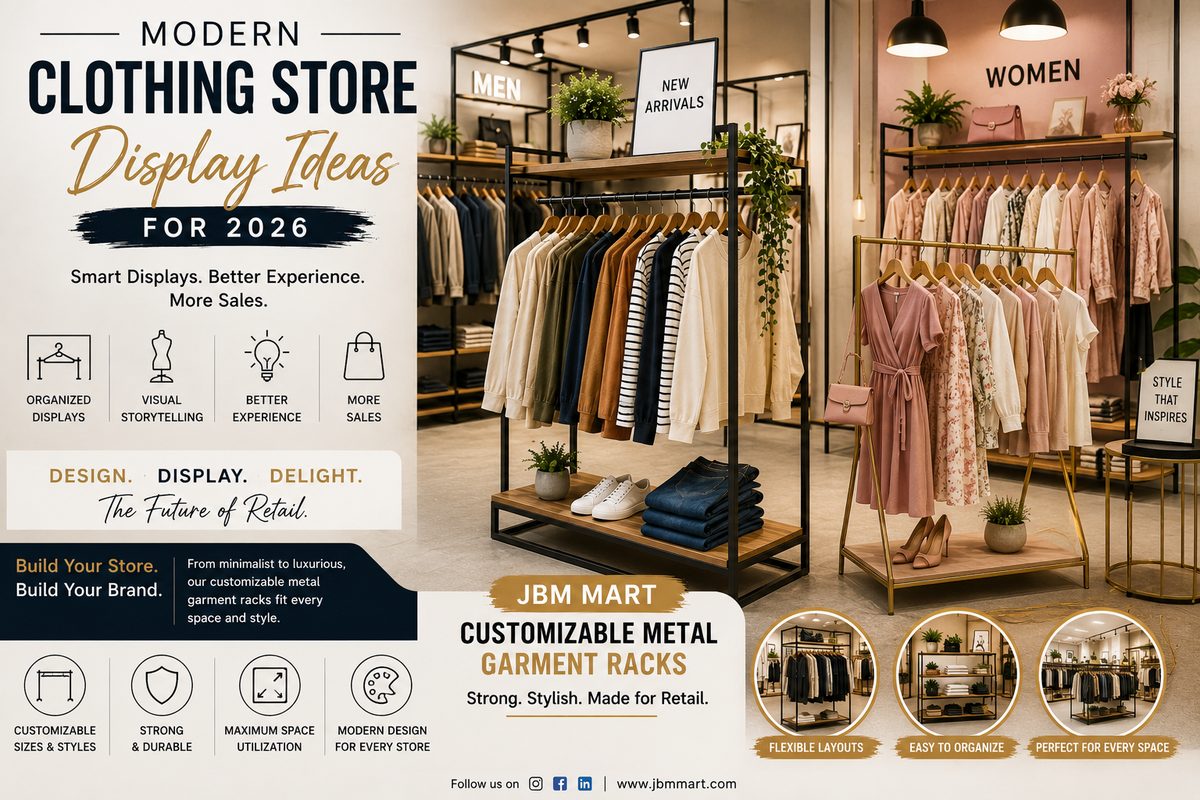
A clothing store is no longer just a place where customers come to buy clothes. In 2026, the way a store looks, feels, and presents its products can strongly influence whether shoppers stop, browse, try something on, and finally make a purchase.
Modern clothing store display ideas focus on more than filling the shop with garments. The goal is to create an organized, attractive, and easy-to-shop environment where every product has a purpose and customers can quickly understand the store's style.
Visual merchandising combines store layout, lighting, colors, product placement, signage, mannequins, and displays to guide customers through the shopping experience.
If you are planning to redesign a clothing shop or simply want to give your existing store a fresh look, here are some of the most useful modern clothing store display ideas for 2026.
1. Create a Strong Entrance Display
The entrance is one of the first areas customers notice. Instead of displaying too many products near the entrance, create one clear Hub.
You can use:
-
A mannequin wearing a complete outfit
-
A small collection of new arrivals
-
Seasonal clothing
-
A promotional display
-
A simple brand message
-
A combination of clothing and accessories
The idea is to make customers curious enough to enter the store.
Modern visual merchandising is moving toward clearer, experience-focused displays rather than simply showing as much merchandise as possible.
2. Use Clothing Racks to Keep Products Organized
Clothing racks remain one of the most practical elements of a fashion store. However, instead of arranging every garment randomly, organize racks according to a clear shopping logic.
For example, you can arrange clothing by:
-
Category
-
Size
-
Color
-
Collection
-
Occasion
-
Season
-
Price range
A metal garment rack can work particularly well in modern stores because it provides hanging space while keeping the floor visually clean.
For smaller stores, vertical garment displays can also help make better use of available space without making the shop feel overcrowded.
3. Try Color-Blocked Displays
Color blocking is an effective way to make clothing displays look organized and visually attractive. Instead of mixing every color together, group similar or complementary colors. For example:
White → Beige → Brown → Black
or
Pink → Red → Purple
This creates a visual flow and makes it easier for customers to notice collections.
Color, contrast, and white space are important elements of effective visual merchandising because they can direct attention toward specific products.
4. Create Complete Outfit Displays
One of the biggest mistakes clothing stores make is displaying individual products without showing customers how they can be worn together. Instead, create complete looks. For example:
Casual Look
-
T-shirt
-
Jeans
-
Sneakers
-
Cap
Office Look
-
Shirt
-
Trousers
-
Blazer
-
Belt
Weekend Look
-
Overshirt
-
T-shirt
-
Jeans
-
Accessories
This type of display helps customers imagine the complete outfit instead of thinking about one garment at a time.
5. Use Mannequins as Storytelling Tools
Mannequins are still an important part of modern clothing store displays. But in 2026, simply placing one mannequin in the middle of a store is not enough. Create a story around the mannequin.
For example, a women's fashion store could create a Weekend Brunch display with a complete outfit, handbag, footwear, and simple background décor. A men's store could create a Smart Casual display with a shirt, trousers, watch, shoes, and jacket.
Grouped mannequin arrangements and themed displays can communicate a complete lifestyle or occasion more effectively than isolated product displays.
6. Add a Dedicated New Arrivals Section
Customers naturally look for something new when they enter a fashion store. Create a clearly visible New Arrivals section near the front of the store.
You can use:
-
A garment rack
-
Wall-mounted displays
-
Mannequins
-
Shelves
-
Simple signage
-
Accent lighting
Keep this area regularly updated so returning customers see something different.
7. Use Wall Space Efficiently
Don't depend only on floor racks. Walls can become valuable display areas for:
-
Folded clothes
-
Jackets
-
Shirts
-
Bags
-
Caps
-
Shoes
-
Accessories
A combination of hanging rails and shelves can make a wall both functional and decorative. Using vertical space is especially useful for smaller clothing shops where floor space is limited.
8. Create Separate Zones Inside the Store
Instead of putting everything into one large display area, divide the store into smaller shopping zones. For example:
Zone 1 – New Arrivals
Latest collections and trending products.
Zone 2 – Women's Collection
Dresses, tops, jeans, ethnic wear, and accessories.
Zone 3 – Men's Collection
Shirts, T-shirts, trousers, jackets, and casual wear.
Zone 4 – Accessories
Bags, belts, caps, scarves, and other complementary products.
Zone 5 – Sale
Discounted or clearance products.
Themed and multi-zone merchandising is becoming increasingly relevant in Indian retail because it helps shoppers discover collections more easily.
9. Don't Overcrowd the Store
More products do not always mean better merchandising. If racks are packed too tightly, customers may find it difficult to browse. A crowded display can also make even good-quality clothing look less premium.
Leave enough space between:
-
Racks
-
Mannequins
-
Tables
-
Shelves
-
Walking areas
White space gives important products more attention and helps customers move comfortably through the store.
10. Use Lighting to Highlight Products
Lighting can completely change the appearance of a clothing store. Use different lighting levels for different purposes:
Ambient lighting:
Provides overall illumination.
Accent lighting:
Highlights mannequins, new arrivals, or featured collections.
Display lighting:
Makes products on shelves and racks easier to notice.
Good lighting can make fabrics, colors, textures, and details more visible while creating a stronger store atmosphere.
11. Add Mirrors Near Display Areas
Mirrors are essential in clothing stores because customers want to see how an outfit looks before purchasing it. Place mirrors strategically near:
-
Clothing racks
-
Trial rooms
-
Outfit displays
-
Accessory sections
Large mirrors can also make a small store feel more spacious.
12. Create an Instagram-Friendly Display
In 2026, your store display can also become part of your marketing. Create a small photo-friendly zone where customers can take pictures or videos.
You could include:
-
A branded wall
-
A stylish mannequin arrangement
-
A seasonal backdrop
-
Attractive lighting
-
A simple store logo
-
A statement display
Modern visual merchandising increasingly considers how displays appear both in-store and on social media.
13. Use Flexible and Modular Displays
Fashion trends change quickly, so your store layout should be easy to change as well. Instead of permanently fixing every display, consider flexible solutions such as:
-
Movable garment racks
-
Adjustable shelves
-
Modular display stands
-
Lightweight fixtures
-
Reconfigurable tables
This allows you to change the store according to new collections, festivals, sales, and seasonal campaigns. Flexible fixtures are particularly useful in 2026 because retailers increasingly need to refresh displays more frequently.
14. Build Seasonal Displays
Seasonal merchandising gives customers a reason to notice your store again. Some examples include:
Summer:
Light colors, cotton clothing, sunglasses, and casual outfits.
Monsoon:
Light jackets, waterproof accessories, and practical footwear.
Festive Season:
Ethnic wear, occasion wear, accessories, and gift-ready collections.
Winter:
Jackets, sweaters, coats, scarves, and layered outfits.
Seasonal displays can be updated without completely redesigning the store.
15. Combine Clothing With Accessories
Cross-merchandising is another effective clothing store display idea. Instead of separating every product category, show products that customers are likely to buy together. For example:
Dress + Handbag + Shoes
or
Shirt + Trousers + Belt + Watch
This makes styling easier for shoppers and can encourage additional purchases.
16. Use Digital Elements Where They Actually Help
Technology can add another layer to a modern clothing store, but it should have a purpose. Depending on your budget, you can use:
-
Digital screens
-
QR codes
-
Product information displays
-
Digital catalogs
-
Online stock checking
-
Interactive styling suggestions
The goal is not to add technology simply because it looks modern. It should make shopping easier or provide information that customers need.
17. Choose Display Fixtures That Match Your Brand
Your display furniture should support your store's overall identity. A premium fashion store might use:
-
Minimal metal fixtures
-
Neutral colors
-
Clean lines
-
Warm lighting
A streetwear store might prefer:
-
Dark metal racks
-
Industrial-style fixtures
-
Bold signage
-
Strong contrast
A children's clothing store could use:
-
Brighter colors
-
Lower displays
-
Playful graphics
-
Easy-to-reach racks
The fixture itself becomes part of the brand experience.
18. Keep the Checkout Area Useful
The checkout counter is another opportunity for product display. Instead of leaving this space empty, use it for small, easy-to-purchase products such as:
-
Socks
-
Belts
-
Wallets
-
Hair accessories
-
Caps
-
Small fashion accessories
Keep this display neat and avoid filling the counter with too many products.
19. Refresh Your Display Regularly
A display that looks attractive today can become invisible to regular customers after a few weeks. You don't necessarily need to redesign the entire store every time. Small changes can make a big difference:
-
Move the main mannequin
-
Change the featured collection
-
Rearrange a garment rack
-
Introduce a new color story
-
Update signage
-
Change lighting focus
-
Create a new outfit combination
Regularly refreshed displays help the store feel active and current.
20. Focus on Experience, Not Just Products
The biggest clothing store display trend for 2026 is perhaps the simplest: make the store feel worth visiting.
Online shopping already gives customers convenience. Physical stores need to provide something different—better product discovery, styling inspiration, personal service, and an environment that feels enjoyable.
Retail trends in 2026 increasingly emphasize memorable physical experiences, thoughtful design, personalization, and service rather than technology for technology's sake.
How JBM Mart Can Support Modern Clothing Store Displays
A well-designed clothing store needs the right balance between style, organization, flexibility, and space utilization.
Products such as garment racks and other storage and display solutions can help retailers keep clothing organized while making better use of available floor space. A suitable garment rack can be used for new arrivals, seasonal collections, men's clothing, women's clothing, or promotional displays.
The key is to choose display solutions according to the store's size, product range, customer flow, and overall design theme.
Final Thoughts
Modern clothing store displays in 2026 are moving toward cleaner layouts, stronger storytelling, flexible fixtures, better lighting, organized product zones, and memorable shopping experiences.
The best display isn't necessarily the biggest or most expensive one. It is the one that helps customers understand the products quickly, move comfortably through the store, imagine complete outfits, and enjoy the shopping experience.
Whether you're opening a small boutique, upgrading an existing garment shop, or designing a larger fashion store, thoughtful clothing store display ideas can turn unused space into an attractive and functional part of your retail strategy.
For retailers looking for a flexible clothing display solution, JBM Mart customizable metal garment racks can be a practical choice. Their customizable design can help stores create displays according to different clothing categories, collections, store layouts, and changing merchandising needs.