
31 Aug 2026
The Evolution of TV Setups: From TV Cabinets to Modern Mounts
Discover the evolution of TV setups from traditional TV cabinets to modern TV mounts. Learn how wall and ceiling TV mounts save space, improve viewing flexibility, and create a clean, modern entertainment setup with JBM Mart.
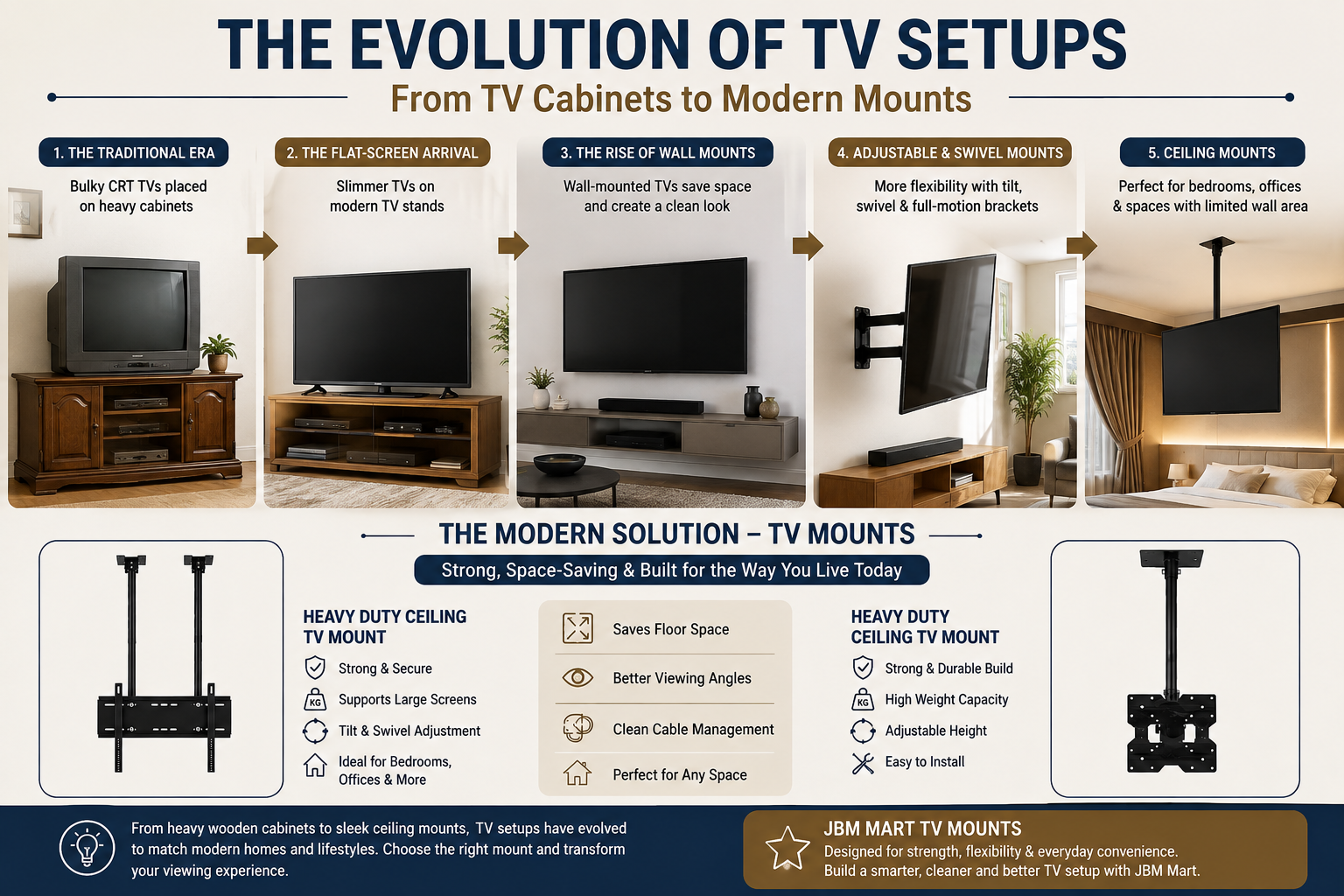
The way we watch television has changed dramatically over the years. From large box-shaped televisions placed on heavy wooden cabinets to slim smart TVs mounted neatly on walls or ceilings, TV setups have come a long way. Today, a television is no longer just an entertainment device. It has become an important part of modern home interiors, and the way it is installed can affect both the appearance and functionality of a room.
The evolution of TV setups is closely connected with changes in television technology, home design, available space, and viewing habits. As TVs became thinner and lighter, traditional TV cabinets gradually gave way to TV stands, wall mounts, swivel brackets, and ceiling mounts.
In this blog, let's explore how TV setups have evolved and why modern TV mounting solutions are becoming increasingly popular.
1. The Era of Traditional TV Cabinets
Before flat-screen televisions became common, most homes used large CRT televisions. These TVs were deep, bulky, and heavy, which meant they needed strong furniture for support.
A traditional TV cabinet was one of the most common solutions. These cabinets were often made from wood and provided a dedicated space for the television. Many also included drawers, shelves, and compartments for storing DVDs, remote controls, gaming consoles, speakers, and other accessories.
The cabinet became more than just a TV stand. It was often a major piece of furniture in the living room.
However, traditional cabinets also had some limitations:
-
They required considerable floor space.
-
Large CRT TVs were difficult to move.
-
The viewing height depended on the cabinet.
-
Cables could easily become visible and messy.
-
The overall setup could make smaller rooms feel crowded.
As television technology changed, so did the furniture used to support it.
2. The Arrival of Flat-Screen TVs
The introduction of LCD, LED, and plasma televisions completely changed the way people thought about TV furniture.
Unlike CRT televisions, flat-screen TVs were much thinner and generally lighter. They could be placed on smaller TV tables or modern entertainment units without requiring a large, heavy cabinet.
This created new possibilities for home interiors.
People could now choose minimalist TV units with open shelves rather than bulky cabinets. The television itself became slimmer, while the surrounding furniture became more streamlined.
At this stage, many homeowners also started placing TVs directly on furniture such as:
-
TV consoles
-
Wooden TV tables
-
Floating TV units
-
Entertainment centers
-
Open shelving units
The focus slowly shifted from simply supporting the television to creating an attractive and organized entertainment area.
3. The Rise of Wall-Mounted TVs
One of the biggest changes in TV setup design was the introduction of wall mounting.
As flat-screen TVs became thinner, mounting them directly on a wall became practical. Instead of placing the television on furniture, homeowners could install it at a suitable viewing height.
A wall-mounted TV setup offers several advantages:
Saves Floor Space
Wall mounting removes the need for a large TV table or cabinet. This can be particularly useful in apartments, bedrooms, offices, and compact living rooms.
Creates a Clean Appearance
A TV mounted on the wall can give a room a more modern and minimal look. With proper cable management, the entertainment area can look much less cluttered.
Better Viewing Position
A suitable TV mount allows homeowners to position the screen according to the room and seating arrangement.
More Flexible Interior Design
Without a large cabinet underneath, homeowners have more freedom to decorate the space below the television.
4. From Fixed Mounts to Adjustable TV Brackets
TV mounting technology has also evolved.
The first generation of TV mounts was relatively simple. A fixed TV wall mount held the television close to the wall and offered little or no movement.
While fixed mounts are still useful for straightforward installations, modern homes often require more flexibility.
This led to the development of different types of TV brackets.
Fixed TV Mounts
These hold the television close to the wall and are ideal when the seating position is directly in front of the screen.
Tilting TV Mounts
Tilting mounts allow the screen to be angled slightly up or down. They can be useful when the TV is installed higher than eye level.
Full-Motion TV Mounts
A full-motion TV bracket provides greater flexibility. Depending on the model, the television can be tilted, swiveled, or extended away from the wall.
This can be useful in rooms where people watch television from different positions.
5. The Introduction of Swivel and Ceiling TV Mounts
As homes and commercial spaces became more diverse, traditional wall mounting wasn't always enough.
For rooms where wall space is limited, ceiling TV mounts became an alternative.
A ceiling-mounted TV can be particularly useful in:
-
Bedrooms
-
Commercial spaces
-
Offices
-
Restaurants
-
Waiting areas
-
Shops
-
Rooms with limited wall space
Some modern ceiling mounts also provide features such as tilt, swivel, and height adjustment, making it possible to position the screen according to the viewing area.
For example, a heavy-duty ceiling TV mount can be useful for larger televisions where a wall-mounted solution isn't practical.
6. TV Setups Have Become Part of Interior Design
Earlier, the main purpose of a TV cabinet was to hold the television safely.
Today, the television setup is often considered an important part of interior design.
Homeowners now think about:
-
TV wall design
-
Cable management
-
Screen height
-
Viewing distance
-
Wall décor
-
Lighting
-
Sound systems
-
Gaming consoles
-
Streaming devices
A modern TV setup might include a wall-mounted TV, soundbar, floating shelf, concealed cables, decorative lighting, and minimal furniture.
The goal is not simply to install a television. It is to create an organized entertainment space.
7. Smart TVs Changed the Setup Again
The rise of Smart TVs has reduced the need for some traditional entertainment equipment.
Previously, people often needed DVD players, cable boxes, VCRs, and other devices. Today, a Smart TV can provide access to streaming platforms, apps, music, and online content directly.
As a result, modern TV setups can be much cleaner.
However, gaming consoles, streaming devices, soundbars, Wi-Fi equipment, and power cables can still create clutter. This is why cable management has become an important part of modern TV installation.
8. Modern TV Mounts for Flexible Living Spaces
Today's homes are not all designed the same way. Some people live in large houses with spacious living rooms, while others live in compact apartments.
Modern TV mounts provide flexibility for different spaces.
A TV wall mount for small rooms can help save valuable floor space. A swivel mount can help viewers watch from different seating positions. A ceiling mount can be useful where wall installation isn't convenient.
For people who frequently rearrange their furniture, an adjustable mount can also provide greater flexibility than a traditional TV cabinet.
9. How JBM Mart Fits Into the Modern TV Setup
As TV setups continue to evolve, products such as modern TV mounting solutions can help homeowners create cleaner and more functional entertainment spaces.
JBM Mart offers TV-related products designed for different installation requirements, including TV screen protectors, TV stands, and TV mounting solutions. For larger screens, a heavy-duty ceiling TV mount can provide an alternative to traditional furniture-based setups.
The idea is not necessarily to completely eliminate TV furniture. Instead, modern TV setups give homeowners more choices. Depending on the room, you can combine a TV mount with a compact console, storage unit, soundbar shelf, or decorative furniture.
10. TV Cabinet vs Modern TV Mount
|
Feature |
Traditional TV Cabinet |
Modern TV Mount |
|
Floor Space |
Require more space |
Saves floor space |
|
Appearance |
Furniture-based |
Minimal and modern |
|
Cable management |
Can be visible |
Can be concealed more easily |
|
Viewing flexibility |
Limited |
Higher with adjustable mounts |
|
Storage |
Provides storage |
Usually requires separate storage |
|
Small rooms |
Can feel bulky |
Often more suitable |
|
Installation |
Simple placement |
Requires proper installation |
Neither option is universally better. The right choice depends on the room, television size, wall structure, seating position, storage requirements, and personal preference.
Frequently Asked Questions
What was used before TV wall mounts?
Before modern TV mounts became popular, televisions were generally placed on dedicated TV cabinets, tables, entertainment centers, or other sturdy furniture.
Is a TV mount better than a TV cabinet?
It depends on your requirements. A TV mount can save floor space and create a modern appearance, while a cabinet provides storage and can be easier to change or reposition.
What are the benefits of mounting a TV on the wall?
Wall mounting can save floor space, create a cleaner appearance, provide better positioning, and help make a room look more organized.
What type of TV mount is best?
The best mount depends on your room. Fixed mounts work well for straightforward installations, tilting mounts provide angle adjustment, and full-motion or swivel mounts offer greater flexibility.
Can a TV be mounted on the ceiling?
Yes. Ceiling TV mounts are available for suitable televisions and can be useful in bedrooms, commercial spaces, offices, and rooms where wall mounting isn't convenient. The mount must be compatible with the TV's size and weight and installed securely.
How do I make my TV setup look modern?
A simple way is to combine a slim TV mount with good cable management, appropriate lighting, minimal furniture, and a clean wall design. Keeping unnecessary devices and wires out of sight can also make a significant difference.
People Also Ask
Are TV cabinets outdated?
Not necessarily. TV cabinets are still useful when you need storage or prefer furniture-based setups. However, wall-mounted TVs are increasingly popular because they offer a cleaner and more space-efficient appearance.
Does mounting a TV save space?
Yes. Mounting the television on a wall or ceiling removes the need for a large piece of floor-standing furniture.
What is the difference between a TV stand and TV mount?
A TV stand supports the television from below, while a TV mount secures it to a wall or ceiling.
Can I mount a large TV?
Yes, provided the mount is designed to support the television's size and weight and is installed correctly.
Why are modern TV setups becoming popular?
Modern TV setups combine functionality with interior design. They can save space, reduce visual clutter, and create a cleaner entertainment area.
The Future of TV Setups
The evolution of TV setups shows how technology and home design influence each other. We moved from large CRT televisions sitting on heavy wooden cabinets to ultra-thin Smart TVs mounted on walls and ceilings.
Today's television setup is about much more than simply keeping a TV off the floor. It is about space optimization, viewing comfort, cable management, flexibility, and modern interior design.
As televisions become thinner and homes continue to prioritize minimalism, modern mounting solutions are likely to become even more common. Whether you choose a traditional cabinet, a simple wall mount, or an adjustable ceiling mount, the most important thing is to select a setup that works for your space and viewing habits.
The journey from TV cabinets to modern TV mounts is a perfect example of how everyday home products evolve with changing lifestyles. What was once simply a piece of furniture has now become an integrated part of modern home design.